


Before you apply, know what the bank will see
Many Singapore SME owners only start thinking about bankability after a rejection. By then, the business may already have left a trail of weak submissions, unclear documents, and lender fatigue. A stronger approach is to audit the business before the first application goes in.
Bankability is not about looking perfect. It is about whether a lender can understand your cashflow, verify your documents, trust the directors' credit conduct, and see a credible repayment path. If those pieces are not clear, even a profitable company can look risky.

The six pillars banks usually assess
Different lenders use different scorecards, but most Singapore SME loan decisions revolve around the same practical questions. Can the business repay? Are the documents credible? Is the director's credit conduct acceptable? Is the request proportionate to revenue and purpose?
| Pillar | What banks examine | What weakens the application |
|---|---|---|
| Cash Flow | Bank statement inflows, ending balances, revenue consistency, seasonality and working capital cycle. | Near-zero balances, unexplained cash injections, bounced payments or revenue not matching declared accounts. |
| Business Credit | Company credit reports, existing facilities, repayment conduct, trade references and adverse records. | Recent defaults, restructuring, late payments or unclear exposure across multiple lenders. |
| Director Credit | Personal credit bureau records for directors and guarantors, utilisation, enquiries and delinquency history. | High card utilisation, recent missed payments, active defaults or inconsistent personal income evidence. |
| Documents | ACRA profile, financial statements, management accounts, bank statements, NOAs, GST records and contracts. | Late filings, incomplete statements, messy inter-company transfers or documents that do not reconcile. |
| Debt Service | Whether cashflow can support existing debt plus the new facility under lender stress assumptions. | Loan request too large for revenue, thin margins, high existing instalments or weak repayment visibility. |
| Track Record | Operating history, industry risk, customer concentration, contract pipeline and purpose of funds. | Very young business, vague loan purpose, one-customer dependence or funding gap not tied to verifiable need. |
Red flags that can override a strong story
A polished pitch cannot fix a hard-stop issue. If any of these are present, it is usually better to resolve the problem first instead of forcing an application through the wrong lender.
Outstanding IRAS matters, ACRA filing lapses or unresolved compliance issues make the business harder to underwrite.
Recent defaults, 90-day arrears, heavy credit card utilisation or multiple recent loan enquiries can drag down the application.
Returned cheques, failed GIROs, unexplained transfers and inconsistent balances make cashflow look weaker than the business may be.
For Enterprise Financing Scheme facilities, local equity below 30% is a hard eligibility issue even before credit assessment begins.

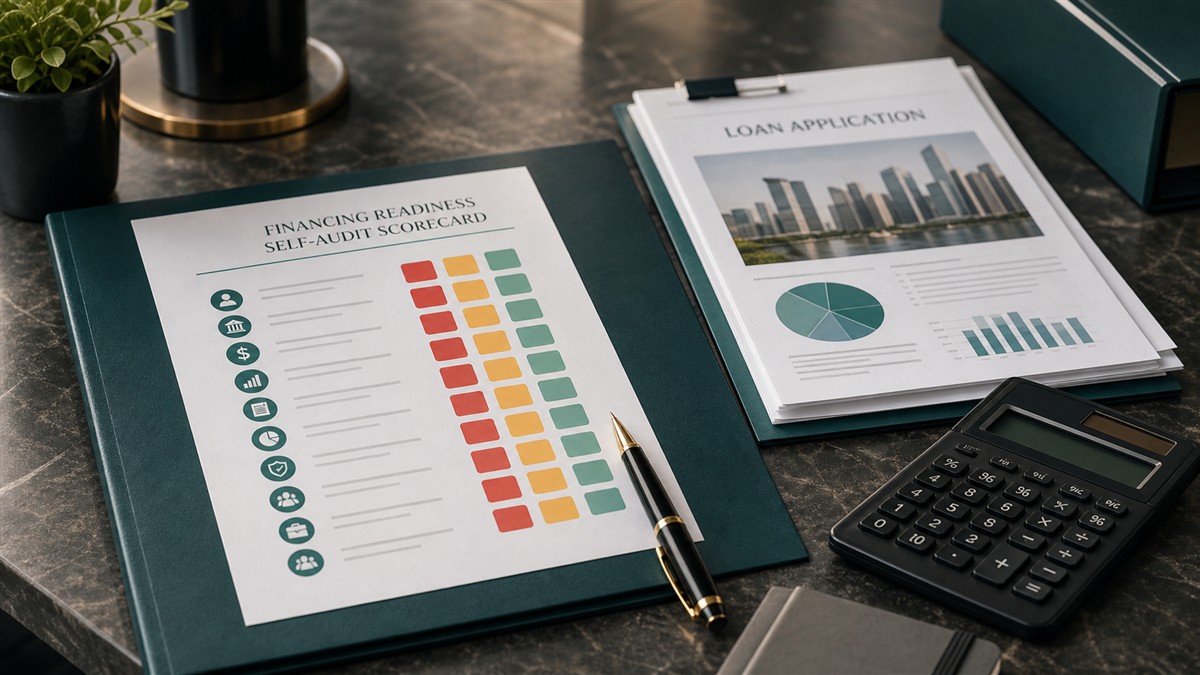
The 25-question SME bankability self-audit
Score one point for each honest "yes". Do not over-score a question just because you can explain it verbally. If the bank cannot verify it through documents, statements or contracts, treat it as a "not yet".
1. Cash flow and revenue
2. Credit health
3. Documentation and compliance
4. Business fundamentals and loan purpose
5. Presentation readiness
MortgageLogic Advisory
Speak with us before the first submission
If your score is borderline, the next step is not to apply to more banks. It is to fix the story, documents, facility structure and lender match before a credit officer forms a view.
- Review your bank statements, director credit profile and current facilities
- Identify whether EFS, trade finance, equipment finance or term loan fits best
- Prepare a stronger loan narrative before submission
- Shortlist lenders based on actual appetite instead of guesswork
How to read your score
Your self-audit score is a planning tool, not a guaranteed approval result. A single serious red flag can override a high score, while a lower score can sometimes be improved quickly with the right documentation and facility type.
Not bank-ready
Pause before applying. Clean up filings, statements, credit conduct and loan purpose first.
Conditionally bankable
You may qualify, but lender selection and document preparation will matter heavily.
Bank-ready
You have a stronger base for submission, subject to lender appetite and credit assessment.
Where EFS fits into the decision
The Enterprise Financing Scheme can help eligible Singapore SMEs access credit through participating financial institutions. The important detail is this: risk sharing supports the lender, but the borrower still repays the full facility and approval remains subject to the lender's credit assessment.
SME Working Capital Loan
For operating cashflow needs such as wages, rent, inventory and day-to-day business expenses, subject to eligibility and credit assessment.
Trade Loan
For import, export, purchase order, invoice, shipment and overseas project cycles where trade documents support the facility.
Equipment and Factory Loan
For productive assets, machinery, equipment or factory-related financing where the asset supports business revenue.
If cashflow, filings or director credit are weak, a risk-sharing scheme may not be enough. Treat EFS as a useful route, not a guarantee.
Who should apply now, and who should wait
Apply now
Three or more years of operations, clean filings, stable revenue, clear use of funds and bank statements that support the loan request.
Apply with advice
Two to three years of operations, inconsistent documentation, amber credit signals, high utilisation or a larger unsecured request.
Wait and repair
Tax arrears, unresolved defaults, weak director credit, off-book revenue, very young operations or documents that cannot be reconciled.
MortgageLogic view: bankability is built, not stumbled into
A strong SME loan application is not simply a stack of documents. It is a clear commercial story supported by verifiable numbers, clean conduct and a facility that makes sense for the business model.
The best time to fix your application is before you submit it. Once a bank declines the case, the next lender will often ask why. Apply once, prepared, with the right structure and the right lender.
FAQ
FAQ About SME Loan Bankability in Singapore
What does bankable mean for a Singapore SME?
A bankable SME is a business whose cashflow, documents, credit conduct and loan purpose can be assessed clearly by a lender. It does not mean approval is automatic, but it means the application is credible enough to underwrite.
What do banks look at before approving an SME loan?
Banks usually review bank statements, financial statements, ACRA records, IRAS filings, director credit bureau records, existing facilities, business vintage, repayment ability, industry exposure and the purpose of funds.
Does EFS guarantee that my SME loan will be approved?
No. EFS risk-sharing reduces lender risk for eligible facilities, but each participating financial institution still performs its own credit assessment and may approve, reduce or decline the application.
Should I apply to multiple banks at once?
Not blindly. A targeted submission is usually better because repeated declines can weaken the case narrative. Match the facility and borrower profile to lenders with suitable appetite before applying.
What should I fix before applying for SME financing?
Start with compliance, cashflow and credit conduct. Resolve tax or filing issues, explain unusual statement movements, reduce avoidable credit stress, prepare a clear loan purpose and collect supporting documents such as contracts, invoices or purchase orders.
